Showing posts with label injury. Show all posts

Monday, July 30, 2012

Donate Your Data: Make Every Ride A Vote For Cycling


Quick Note On Why Data Matters
If you cycle often enough in the U.S., eventually you either hear about or experience a close call with a car and/or a confrontation with antagonistic pedestrians, drivers, or police. Here's an incident captured on video that occurred on my home bike commute (Tunnel Ride) just a few months ago.

This kind of thing often instills a desire for more support from law enforcement and better bicycle infrastructure. It begs the question of how to get more dedicated bicycle paths, more bicycle lanes, or at least more respect from police and motorists.

It Takes More Than Good Intentions
UPDATE: 2014/06: Looks like some municipalities have the same idea and have created a market for the data. That should spur easier data collection and better data mining: Strava’s Cycling App Is Helping Cities Build Better Bike Lanes. Two years since this post. So glad to see this catching on.

UPDATE 2012/08/08:  Portland, OR has installed their first automated bike counter. According to BikePortland.org, this is the first one in the U.S. However, some claim that Arlington, VA has had automated bike counters since 2009 (as shown here).

UPDATE 2012/07/30: Since posting this, I noticed a number of programs that leverage smartphones for cyclists. Cool stuff but it begs two big questions two consider when donating your bike data:
  • Do they make it easy to query all the data you provide to them? In other words, do they share what you give them so you or some other organization can use it?
  • Do they support all the major smartphones (e.g. Android and iPhone)? In other words, are they leaving out half the bike population because they don't have all the software support?
General GPS sharing sites have resolved both these issues:
  • Mapymyride.com shares data but makes you join their "partner program" first.
  • strava.com shares data through their REST API ( i.e. a set of simple web addresses that spew data). You can see charts generated from strava data below.
By contrast, these incentive/mile sites, don't have these issues resolved because their focus is on their drive, not long-term data sharing. Ideally, we want incentives for reporting data but we also want to keep this data handy for advocacy:

Unfortunately, what quickly becomes apparent when you try to advocate for those things is that your interests must compete with the interests of all the non-cyclists or anti-cyclists out there, and that competition is stiff. "Think we need more bike lanes for all the new cyclists on the road?", those competitors will say, "Prove it."

Even when representatives are sold on the idea in general, figuring out where and how to design a new bicycle plan or legislation is still a tough question to answer without a lot of data.

Data: An Essential Tool For Advocacy
For these reasons and more, advocates are desperate for good data on cycling activity. Many schedule regular "bike counts" where they literally sit on street corners and tally the number of riders that go by.

Monitoring: An Essential Tool for Data
Of course, there are hi-tech ways to automate this. Some cities, mostly outside the U.S., have invested in video monitoring systems that use sophisticated software to distinguish what types of vehicles go by: essentially, fixed data recorders scattered around a given city.

The Problems With Monitoring Systems
However, these are very costly, not trivial to install, and can present privacy concerns. That's not exactly a slam dunk to cash-strapped car-loving municipalities in the states.  New systems like BitCarrier attempt to sidestep the cost and privacy issues but they still involve a significant commitment to install and run. All this can make the monitoring system itself a political decision and, thus, a perpetually deferred one. 

Improvise/Overcome
iPhone GPS App
Android GPS App
So what to do? The goal of this blog is to find ways to engage in and promote cycling right now regardless of what legislators are doing or failing to do. Until political will shows up to properly monitor cycling activity, people who care about cycling have to monitor themselves. However, that doesn't mean they can't enlist their own high tech solutions. To that end, there's a sophisticated bike monitor right under our noses, literally, that most cyclists are still not using.

New Tools Automate Self-Monitoring
In recent years, sport cyclists have become addicted to recording all their rides using GPS-enabled cycling computers or smartphones apps that do the same thing. Not only do these devices help with navigation, they record the latitude, longitude, and altitude of all the points on the ride. 

That trend has led to websites catering to these sport riders that allow them to upload the GPS data. The sites not only display a map of the ride, they graphically compare each riders path and aggregate that activity by "segment" on the website.

Currently, this is most often done so wannabe racers can compare their times against other riders. However, this also provides wannabe advocates with excellent data on who is riding where and how often.

Bike Culture Clash
Geeking out with all this data collection can make certain cyclist's skin crawl. BikeSnobNYC recently tweeted, sardonically: "Every ride on your high-end bicycle is important. Be sure to document it by means of a cycling-based social networking application." His comment got retweeted over 100 times.

Self-Monitor: If Not For Your Ego, Then For Advocacy
Although it is clear why some cyclists want to distinguish themselves from those they might perceive as spandexed, "weight weenies", obsessing over ride times, cycling in general still desperately needs the data that all cyclists can provide. In fact, it is urban cycling in particular that could benefit most from adopting this practice since it is the city where so many of cycling's competing interests reside.

NYC's new bike share program equips all its bikes with GPS for just such a purpose (see this StreetsBlog article about that). What's more, cyclists are already wearing video cameras to record accidents and infractions by motorists (see this New York Times article).

This video monitoring is analogous to a flight recorder on an airplane. Using a GPS to record rides simply amounts to having a data recorder as well. What's more, this kind of monitoring is "opt-in" whereas other systems tend  to record you whether you want them to or not.

Recording all your bike rides for speed may seem distasteful to some but letting that preclude the recording of rides for advocacy's sake seems more so. More ride data will result in a wealth of detail on cycling activity. With this simple act on the part of cyclists, advocates can show legislators the hardest data they've ever seen on cyclist ride patterns:
  • ride paths
  • ride dates
  • ride times
  • number of unique riders (aka voters) on a given route in a given time. 
Data like that is essential when justifying the existence and the placement of bicycle infrastructure and legislation.

There's Already A Lot Of Data Out There
Some of this GPS data already includes urban cycling routes. Below, is but a sampling of the data found after a few minutes of searching. Imagine what kind of data will result when more cyclists and cycling advocates start recording their rides the same way.


Potential Bonanza For Bike Advocacy Data
Given all the potential for cycling data and its impact, advocacy groups will hopefully adopt the practice of creating and/or identifying key segments of their roadways on these websites and encourage all riders, sport or otherwise, to record every ride they take. At the very least, doing so, would be a great supplement to official bike counts. The detail on cycling activity, if not total number of rides tallied, will increase exponentially.

Smartphones As Bike Computer/Monitoring Tool
Until recently, the need for an expensive bike computer might have prevented a lot of riders from engaging in bike trip monitoring. However, most people now have GPS-enabled smartphones. Websites like strava.com already have apps that allow these smartphones to record rides and upload data just the way the GPS computers do. In fact, there's little bike computers do that a smartphone app can't anymore.

Below are some sample charts generated from aggregate ride data on strava.com.


Data On Oakland, CA
Rides/Day: Tunnel Road
Oakland, CA
Most Popular Hours
Tunnel Road
 Oakland, CA

Rides/Day
Bike To Work Day North
Chicago, IL
Most Popular Hours
Bike To Work Day North
Chicago, IL

Rides/Day Los Feliz Corner
Los Angeles, CA
Most Popular Hours
Los Feliz Corner
Los Angeles, CA
The first set of charts shows all the rides recorded for the "Tunnel Road" ride in the last 2 months. This is a sport ride but it is also my commute home. The first chart in the set shows rides per day with the total number of unique riders. The second tallies the most popular hours of the day. These show the course gets heavy usage by cyclists every day all day long.

Given that two cyclists were recently hit on this course, many of us would like something done to improve safety. These charts clearly document the demand and ride patterns that will be affected.

Data for Chicago, IL
The second set of charts shows all the rides recorded for the "Bike To Work North" ride in Chicago, IL. I'm not familiar with the terrain but this is a short ride that appears to go right to downtown: not exactly a sport ride. The rider volume is not very high but that is what is so easy to fix if everyone starts getting a "data receipt" for all of their rides.


Data for Los Angeles, CA
The third set of charts shows all the rides recorded for the "Los Feliz Corner" ride in Los Angeles, CA. This looks to be another urban course. This chart even shows activity over several years. The daily activity appears very low but, even so, the number of unique cyclists is not. Again, so much more could be gained for advocacy if all of LA's urban riders participate.


Saturday, October 1, 2011

2011 Cyclists Fatalities Already Alarming. What Can Be Done?

Fatality Spikes
The last few weeks have felt like an epidemic to many cyclists in Los Angeles. BikingInLA reported 52 cyclist fatalities as of September 24 and there have been more since then.

Likewise, Seattle q13fox.com reported 10 fatalities so far this year. Three of those have occurred since July, according to StreetsBlog.

Spikes Not Pervasive
The spike hasn't been seen everywhere. In the San Francisco Bay Area, various news agencies have reported less than 10 for the year. But that's down from 15 in 2009, according to this Bike Accident Tracker. In New York City, Gothamist.com reported the city's 10th fatality on September 4. But that's down from 12 fatalities in NYC in 2009, according to stats cited in the Village Voice. Obviously, the year is not over yet but these numbers are relatively flat given the growth in cycling's popularity and compared to Seattle and LA.


Among improved instrastructure, law enforcement, and training, only law enforcement is quick to implement.
So, as many are asking, "what is going on?" And how do we prevent this? Despite an incredible, perhaps cynical, lack of data collected by our governments on cycling fatalities, we know from experience where solutions lie: improved infrastructure, law enforcement, and training. More detail can surely be revealed about the cause of the spikes this year but simply reviewing some of the cases shows these 3 components would help a lot.

Causes
In Seattle, Seattlebikeblog and others have already identified incomplete and/or poorly designed bicycle infrastructure as a cause. In LA, a common cause is hit and runs by drivers. In New York, one cause was a cyclist going the wrong way down a street. Studies to precisely identify the root causes of all these incidents take time. What can be done to prevent more people from dying right now?

Short Term Solutions: Few
Among improved instrastructure, law enforcement, and training, only law enforcement is quick to implement. New bike lanes or training programs won't save the cyclist who dies tomorrow but better law enforcement might.

Law Enforcement
However, better law enforcement requires the right laws to be in place and resources, a.k.a. dollars, to take action. As of this writing, Governor of California, Jerry Brown, just vetoed cycling advocate's third attempt to pass a "3 feet rule": SB910. Even more challenging, he did so at the urging of the CHP.

Operation Safe Passage
Even so, law enforcement does act on similar issues. Right now, a collaboration of police agencies and the CHP are implementing "Operation Safe Passage", a program to enforce "zero tolerance" of hazardous driving around schools. This operation was planned in advanced but it was able to start just a day after a 6 year old pedestrian was killed.

Since cyclists are not concentrated in one area like a school, such a program is tougher to scope to address cycling risks. Nevertheless, something similar could be designed and implemented quickly if the political will exists.

Sources of Political Will
So where to get political will? The three classic sources are money, publicity, and pooling support with other groups. All are already at work for cycling in various degrees. With immediacy being the current goal, only one stands out.

Money Can't Buy Us Love
In the current system, money could very possibly buy us love but can we afford it and do we want to perpetuate this perverted system? Regardless, using money to lobby for cycling has obvious drawbacks for the cycling community. Bicycles alone do not represent the dollars that cars and other industries do.

Bicycle Revenue Connection Still Fuzzy
Many studies show bike-friendly communities do generate lots of revenue but the association with all those dollars is not as direct. Any bicycle lobby will find it tough to compete until it consolidates financial support from all the ancillary businesses that benefit from bike-friendly streets. And that won't happen until more bike-friendly communities are created which, ironically, requires more lobbying.

Publicity
So if money can't buy cyclists love (at least for now), what about publicity? These tragedies have produced that. Seattle's mayor plans to hold a bicycle safety summit in response to all the recent cycling fatalities. However, summits don't necessarily lead to a solution as Los Angeles knows all too well. Their mayor held a bike summit last year. Despite a lot of great cycling developments in LA since then, the deaths keep coming.

Even Alan Dershowitz Can't Get Justice
In order for such events to be effective, they need the focus of the greater majority and not just the cyclist community. As Alan Dershowitz's experience shows, as he tries to identify all those involved in his sister-in-law's death, going it alone to get justice is tough. If one of the foremost attorney's in the country can't get justice, it is clear other forces need to be employed.

With a high enough profile, Mr. Dershowitz would get a cooperative DA and Los Angeles could immediately find/raise money for officers to clamp down on texters, speeders, and drunks causing the hit and runs. Without that larger audience, no summit or anything else will generate enough political will to do much more than is already being done.

Publicity Possibilities
AIDS Awareness
Nevertheless, getting that focus is not impossible. Good lessons for how to do this lie in how AIDS awareness was expanded beyond the minorities that first experienced the disease. Again, the problem is time: expanding AIDS awareness took decades.

Occupy Wall Street
So what can be done in the short term? The group Occupy Wall Street is showing one way right now: a protest. However, this is having limited success because their message is not clear and they are not appealing to the majority's self interest. This lack of focus may be intentional but it still leaves the mainstream confused and apathetic.

Overcoming Distraction
If you want a distracted person's attention, you can't waste time telling them what you are against, you've got to tell them what you are for, what you want and why they should care, and do this instantly. That's more rally or vigil than protest.

Celebrity Association
One way to instantly get people to care is to simply get familiar faces associated with your event. The Occupy Wall Street protest really took off when Michael Moore and Susan Sarandon showed up: shallow but true. The other way to engage is to illustrate the magnitude of the loss, again instantly, e.g. the AIDS quilt.

Rally For A Common Cause
This is what cyclists can do in the short term. Hold a vigil or rally for those we've lost with something visual and large of which distracted passers by or TV viewers will take note, and with a clear way for empathetic people to respond. With a high enough profile to the event, it is possible to obtain substantial new resources quickly.

Pooling Support
Pooling support with groups sharing common interests is yet another way to build support. In this case, the obvious group is pedestrians. Many groups already combine cyclists and pedestrians for this reason. This group is as financially challenged as the cyclist group, so joint efforts may not have a huge impact in lobbying any legislature. Nevertheless, it could potentially have a huge impact on any rally. Like the cycling community, pedestrians suffer greatly from cars. Many people do not cycle but almost everyone is, or has been, a pedestrian at some point. Holding a combined rally would appeal to the majority's self interest.

Long Term Solutions
A lot of the long term work is already being done. The goal is obviously to do it more effectively and swiftly. One well-known key to that is to fill the data gap. Enact legislation that forces officers and other officials to collect detailed data on bicycle traffic volume and accidents.

Data gives the few intrepid politicians out there the foothold they need to take unpopular or unprecedented action. Unfortunately, many industries like the oil, tobacco, and auto industries know this so they sometimes lobby against collecting the data.  Nevertheless, from good data can come good infrastructure, training, as well as the good laws and enforcement.

After supporting any rally in support of better law enforcement, my focus is going to be on legislature that improves data collection on all cycling activity including these accidents. At best, we need to know as much detail as possible about the cause of these tragedies. At least, we need to concretely document for the powers that be how many more of us are now out there.

None of this will bring those victims back but for those of us that feel we must do something, these are constructive and tenable.

Sunday, September 19, 2010

The Bike of Mormon

Cycling is the closest thing I've come to finding a calling. As a philosophy major at UC Berkeley, I analyzed religion but never adopted it. Over my life, I've sampled a few (buddhism, hare krishna, numerous flavors of christianity) but nothing really took. The only message that ever touched me was that, afterlife or no, the earth sustains us now so caring for it ought to be a high priority.

Back in the 80s, I did a semester of college in central Los Angeles. The Iran-Iraq war was causing oil price spikes. A family friend's 5 year old son died after he was hit by a car in their neighborhood. Smog alerts and traffic jams were a frequent part of the nightly news.

Cycling seems a perfect fit for all Christians given it reflects at least 4 of 7 heavenly virtues: temperance, diligence, patience, and humility.

Given all this, I was pretty passionate about doing something real and immediate to eliminate pollution, oil addiction, and car domination. My answer was to use only a bike to get around Los Angeles. But after a couple of months cycling between Watts and Westwood, my breathing got strained and I was coughing up black soot with regularity. This is not to mention all the hazing and near death experiences from cars. I lost faith in my cause. I felt like the world would never see what I saw in cycling: a way to solve so many huge problems all at once with so little.

More than 20 years later, my faith in the promise of cycling has been rekindled by all the news from around the world about the great awakening to cycling's benefits: to reduce obesity, healthcare costs, budget deficits, etc. So it was interesting timing to run into a couple of fellas using cycling to proselytize their faith.

Returning from lunch on a really hot day, I saw these two Mormon missionaries (Elder Campbell and Elder Kim) cycling through a business park. They were wearing classic Mormon missionary attire: dark slacks, white short-sleeved shirt, and tie.

I've seen missionaries in many settings but never on bikes. I was impressed: partly because the church obviously recognized how effective bicycles can be as a serious mode of transport and partly because cycling in their attire on such a hot day already displayed a lot of passion for their faith.

Given my travails in LA years earlier, I felt for these guys. Fascinated, I chased them down and asked for an interview. A few weeks later, we met in front of the local bike shop and went for a ride. They brought me back to one of the churches they work with in the area. We stopped and had a nice chat about their mission, their faith, and their cycling.

What a journey for these guys. Elder Campbell came from Canada and Elder Kim came all the way from Korea (and speaks perfect English). They had never met before they started their mission. Yet, they are deeply united by a profound sense of being blessed and an intense desire to share that with as many people as possible. To this end, they cycle as far as 20 miles at a stretch for hours each day. They'll continue this for 2 years. They say it is all worthwhile, especially, when they see someone really receive their message.

It turns out, Mormon missionaries have a long tradition of cycling. There are even websites, like the missionary depot, dedicated to helping them obtain cycling gear. Not all missionaries cycle but quite a few do and have for years. I am impressed to see this zeal for bikes within the Mormon church. Cycling seems a perfect fit for all Christians, not just Mormons, given it reflects at least 4 of 7 heavenly virtues: temperance, diligence, patience, and humility. I'd argue you could include kindness (to the earth).

Cycling runs in the family as well as the church for Elder Campbell. He comes from a family of downhill mountain bike racers. The terrain in Canada is perfect for that. However, he says he never biked as much as he does now and does not expect to use bikes for transport much after his mission. He says there's too much snow back in Canada to make it a viable transport option in winter. I mentioned to him, that it is possible to ride in snow.  I told him about the folks I found cycling in Jackson Hole last December but I agreed it is challenging.  Regardless, after his mission, he plans to get a road bike to keep in shape.

I asked them about some of the realities of cycling. For instance, did they get hot in their uniforms? That was a definitive "yes" but the church allows no alternative to the standard uniform even while cycling. The goal is to look professional while performing church duties. They certainly do that, even if the guys do look a little glossy after a ride.

Elder Campbell told the story of getting his seat stolen and having to ride home without one. Now they are experts at knowing which neighborhoods are the most vulnerable. Beware of Monument boulevard they said. "Everyone gets their bike stolen there".  I recommended a few things from my post about Cycling and Security.

Both they and I noted how both missionaries and cyclists are often antagonized, or anyone dressed or acting differently for that matter. For cycling missionaries, it's a double risk. Some drivers and pedestrians can be downright hostile to cyclists. They confirmed missionaries can sometimes experience similar hostilities both on and off the road. These experiences are painful but we both agreed they help us empathize with folks who don't fit a particular mold.

While we commiserated about the challenges of spreading our respective messages of hope, I realized that I feel like a bit of a missionary myself. Only, my gospel is cycling.

Though our belief systems differ, I wish them the best of luck in their mission and a safe journey on their bikes and beyond. 

Sunday, April 18, 2010

Bike vs. Car Survivor Talks Cycling, Healthcare, and Cars

Back in March, my friend Scott Calvert introduced me to an avid cyclist (and now a new friend) who had been in a horrible bike vs. car accident in San Francisco. His story so beautifully illustrates cycling, healthcare, and insurance issues that I asked him for an interview on PlanBike.

His name is Johan Beisser (pronounced "Yawn"). He's lived all over the world and all over the country both as a cyclist and motorist. He currently lives in San Francisco. Up until 7 months ago, he was using his bicycle in the city as a major mode of transport. Then, on September 16, 2009, something bad happened to him while riding his bike.

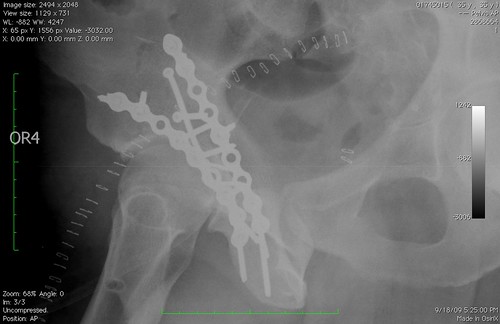
He was moving through the intersection of Polk and Geary when a car darted right in front of him. Things happened so fast that he could not avoid collision. Instinct seems to have brought his leg up to brace himself for the impact. Unfortunately, his leg went through a side window of the car and his body kept traveling until it totaled the outside of the car. The primary injury was a shattered hip socket. Although doctors managed to put his hip socket back together, the final result will be potentially severe arthritis in a decade or so.

Johan was about done with physical therapy when we met. Amazingly, he's walking pretty well now. Still, he's facing a number of long term effects of the injury: physical, financial, and psychological.

What follows is a Q and A with Johan Beisser about cycling, his crash, and his thoughts on both now after his experience.

PlanBike: How long have you been cycling as serious transport?
Johan: Off and on since 1996. I ended up using it really seriously in 2007 after getting a job in Mill Valley while I was living in Sausalito. At that point I was even preferring to ride the bike to the exclusion of the motorcycles most of the time.

PlanBike: How far do you typically ride?
Johan: A minimum of 6 miles a day, with 40 to 50 miles on Sundays. Occasionally, I'd do a "short loop" of 17 miles to and from Ft. Point (just under the Golden Gate Bridge) in the evenings, along the waterfront (basically along Embarcadero).The objective would be to beat the sunset to the bridge, and be home before dark.

Right now, due to my injury and healing process, I can't seem to do much more than 10 miles on a stationary bike before getting frustrated and bored.

PlanBike: What motivated you to start cycling?
Johan: Honestly, I just like things that don't balance themselves until they're moving.

I've been using a phrase "Two Wheel Revolution" for a while as a motivator around personal transport being smaller and more involved. I generally like small, light, and fast modes of transit, especially those that permit me to really experience the thrill of zipping along with the wind, weather, and road ahead. Sports cars, sport motorcycles, and light bicycles all fall in to this category.

This last time, it was a combination of economics and health benefits. I turned 33 in 2007 and something about being older got me to plan for the future a little more, and take the time to invest in my body and long term health. So, the natural choice was to buy a cheap Bianchi Pista, and start riding that to and from my job site. It turns out I really like the simplicity of a fixed gear, but hate the pressure on my knees when slowing down.

In 2008 I moved to Portland, OR, and stayed carless there. By then I'd sold both my motorcycles, and pretty much lived the fixed gear lifestyle: riding it everywhere in the city. Upon moving back to the bay area, I supplemented the Pista with a geared bike, and used it for everything from grocery runs to transit to meet friends.

PlanBike: How did you find Portland for bikes?
Johan: Portland is actually very bike-friendly. It's shockingly easy to go from downtown to the outer areas of the city by bike, park and lock it up. For example, you can go from SE Portland to the airport with your bike with it being welcomed on the light rail system, and every bus.

The city has not only embraced bicycles, they've actively cultured a true cottage industry around bike building, cycling as a real urban transport alternative, and bicycles as transport first. I can't, off hand, name a single business that doesn't have bike parking of some sort nearby or on premises.

I suspect it helps that the larger portion of PDX is topologically flat (SE/SW side), with the harder grades being NE/NW. Combined with an easy grid layout.

That said, there's still the typical "road rage" aggression against people on bicycles. Mostly surprising out of just how atypical it is for the city. I can say I never encountered it myself.

When I was riding to and from my job outside of Parker, CO I had the occasional thing thrown at me, a couple encounters with drunken cowboys in trucks. But, once in the urban areas this was again atypical. From what I hear, Denver has become very bike-friendly since I lived there (over 16 years ago now) and has tried to encourage more cycling. It helps that it's the traditional home for most of the Olympic Teams to train in.

PlanBike: Given the accident, what would you do differently?
Johan: It's hard to say. Right after the accident I was wondering what I did wrong, and my conclusion has been "nothing." I could have kept my knee lower during impact, or hit the brakes earlier, or assumed the driver was going to turn well before he did.

I don't for a moment think that my accident, as traumatic as it was, has put me off of riding bicycles on San Francisco city streets. What it will have done is made me trust traffic and cars even less than before. I did let my guard down that night, and made the tragic mistake of forgetting that people in cages don't see you, and are out to hit you with their cars.

PlanBike: What would bikeways in SF look like, if you had your way?
Johan: SF has made the mistake of trying to embrace cars and the car culture without having rebuilt infrastructure to put them somewhere or let them pass through the City without having to fight with traffic.

It's kind of a shame that the bike lanes (painted, and otherwise) mostly don't go anywhere useful, or suddenly stop instead of continuing along a certain commonly used road or bike way; my favorite example is 7th Street to Market, which forces you to either play in traffic, wait through 2 cycles of the light, or attempt to make a left on to Market street from the turn lane, while the average speed of car traffic is over 25mph. Frankly, the City gives lip service to bike friendliness and infrastructure, while in reality not caring one bit.

I'd love to see better bike lanes that go somewhere, with signed, posted, and known bike boulevards, much like Oakland, Palo Alto, Mountain View and San Mateo have set up. Not just scenic, but useful routes for going from Point A to Point B, that have equal enforcement
for all kinds of traffic. Bike lanes aren't of any use if cars are double parked, pedestrians walk in them, drivers open their doors without looking first, or the cars "sharing the road" are giving you
almost no clearance.

As nice a gesture as they are, the "Sharrows" painted on many SF streets are just decoration on the streets that drivers tend to just ignore. It doesn't seem to have raised awareness of cyclists on the routes that are marked that way.

PlanBike: What should drivers do differently?
Johan: Pay more attention. I have this same complaint as a pedestrian, motorcyclist, bicyclist and driver: people need to understand they're driving a 2000+ pound machine that takes awareness to use correctly and safely. A car is not a mobile workplace, breakfast table, washroom, or phone booth. Yet, daily, I see people using it for all of these things.

PlanBike: All told do you know roughly how much this accident cost in dollars? Any breakdown in costs would be great?
Johan: It's cost my health insurance company around $172,000. Maybe a little more, little less, but at that scale what's another thousand or so? It'll cost me around $13,000 to pay off my portion. Possibly less, and probably more. I honestly don't know yet.

I haven't really gone in to the breakdown, and I don't believe I can share it until the associated lawsuit has either settled or gone forward.

PlanBike: Do you think the recent healthcare legislation will help with accidents like yours?
Johan: Definitely. At least in my case, if my doctor is right and my hip deteriorates to the point of requiring replacement in 15 years, I can still get coverage to help the replacement. I suspect the change will reduce the number of lawsuits for medical payments - which is what mine is - and reduce the overall cost of some of the care. It won't change the charging and billing practices of hospitals.

Speaking of insurance. If you have a car or motorcycle, I'd push you to maximize your UIM (Under-/Un-Insured Motorist) coverage to something just above "reasonable" in your mind. You should raise your medical liability coverage well above the CA minimums. It'll help you when you have an accident, even if it feels like gouging right now.

I've learned a bunch about insurance and coverages through this, and little of it pleasant. I'm grateful to Anthem for not denying coverage so far, and for not dropping me as an insured. It's a bit of an abusive relationship, when you think about it in those terms.


Thanks to Johan for this talk. Hope he continues to improve and continues cycling.